
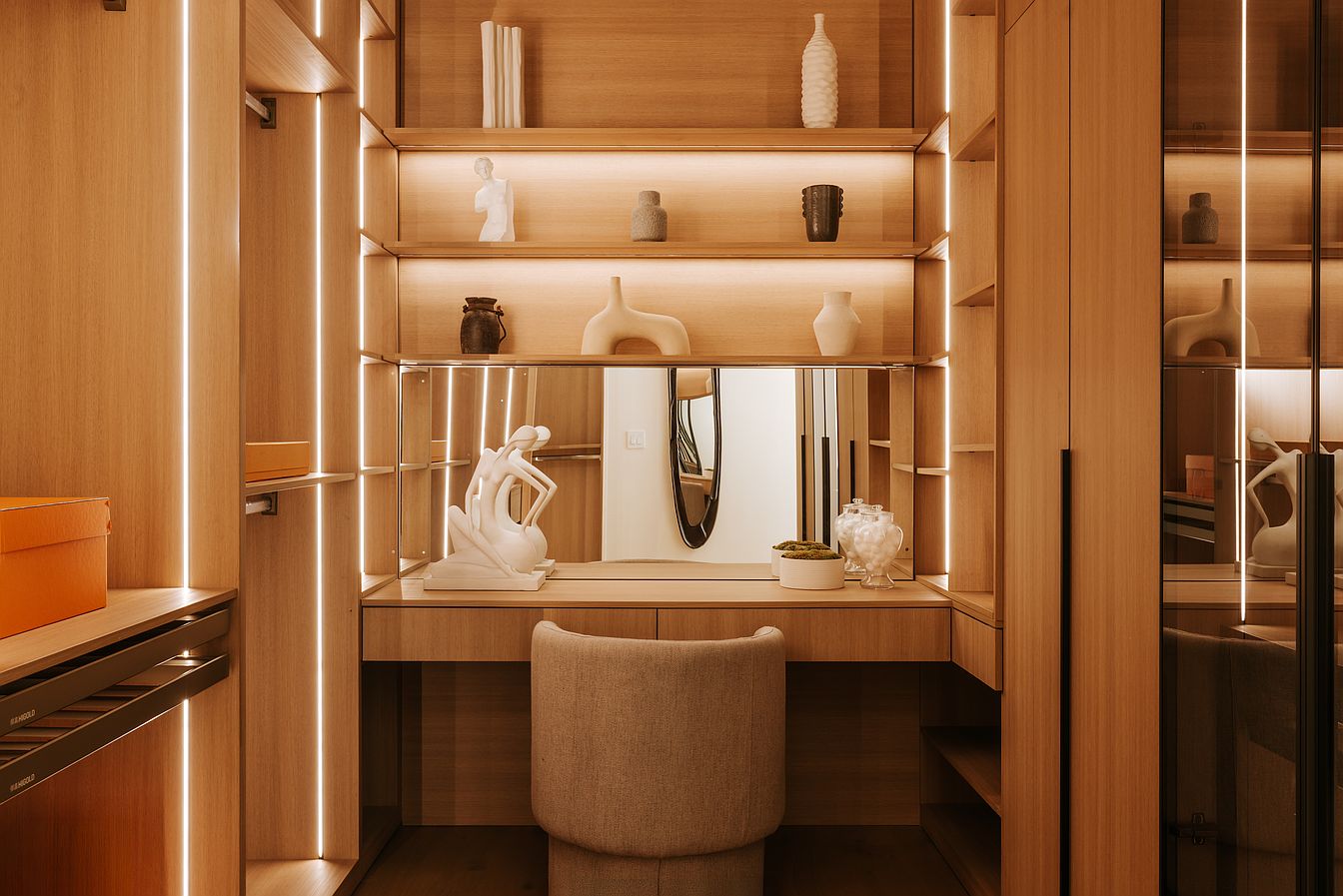
For a South Florida residence with generous windows and spaces that open toward a terrace or garden, lighting deserves a place in the design conversation early. Our editorial approach is to start with daily routines rather than a ceiling full of fixtures. Cooking, reading, hosting friends, and finding your way through the house at night each call for a different setting.
Begin with daylight and the furniture plan
Walk through the proposed rooms on paper. Where will you sit to read? Which surface will you use for food preparation? Where will artwork hang? Mark these activities before deciding where light should come from. A symmetrical ceiling plan can be a useful visual starting point, but it is not a substitute for understanding the room below it.
The U.S. Department of Energy notes that good daylighting balances useful natural light against excess sunlight that can create glare and heat gain. For a South Florida design brief, our practical suggestion is to review windows, shading, seating, and electric lighting together. Ask the design team to assess the room at different times of day instead of judging it from a single bright rendering. Department of Energy: Lighting & Daylighting
Give each light a purpose
Think in terms of three jobs: helping you move comfortably through a room, supporting a specific activity, and drawing attention to a feature you want to see. This is a planning framework, not a prescription for a particular number of fixtures.
In a kitchen, for example, distinguish the work surface from the dining or gathering area. In a living room, consider whether you would like to read while someone else watches a screen. Discuss which lights should operate independently so the entire space does not need to be equally bright for every activity.
Ask to review sightlines from seated positions as well as standing ones. A fixture that looks elegant on a reflected ceiling plan may deserve a second look when viewed from a sofa. The purpose of the review is to identify the experience you want before locations and wiring are finalized.
Look at finishes under the proposed light
A warm-looking lamp and a lamp that renders material colors faithfully are not the same specification. DOE distinguishes the color appearance of the light itself from its effect on the appearance of objects. Its LED guidance also cautions that color-rendering metrics have limitations. Department of Energy: LED Basics
Our recommendation is to assemble a small group of the actual finish samples—stone, wood, paint, and fabric—and view them under a sample of the proposed lighting. Compare the effect in daylight and after dark. Use the exercise to discuss the look you prefer, rather than choosing every source from its color-temperature number alone.
Keep a record of the approved products and samples. For rooms that open into one another, review the selections together so the transition between spaces feels deliberate.
Decide what dimming should do
“Dimmable” does not fully describe the experience. DOE explains that dim-to-warm products become warmer in appearance as output falls, whereas tunable-white systems can offer separate control of light color and intensity. These are different choices, with different controls and product requirements. Department of Energy: Understanding LED Color-Tunable Products
For your own home, describe the result you want in ordinary language: a bright preparation setting, a relaxed dinner setting, or a low evening setting. Ask the lighting team to demonstrate the proposed fixtures and controls together, including their lowest useful level. That makes the conversation more concrete than a list of features.
Make the controls easy to live with
Before handover, try the controls as someone arriving home would. Can a guest find the right switch? Can you adjust the room without opening an app? Are the scene names understandable? These are editorial usability questions worth including in the brief, whether the system is simple or highly automated.
The goal is a home that moves comfortably between everyday activities. A considered lighting plan supports the architecture while making those changes feel natural.
For the outdoor side of the conversation, see Designing for Shade: Outdoor Living in South Florida. To begin discussing a broader home project, contact Xuxi Builds.